



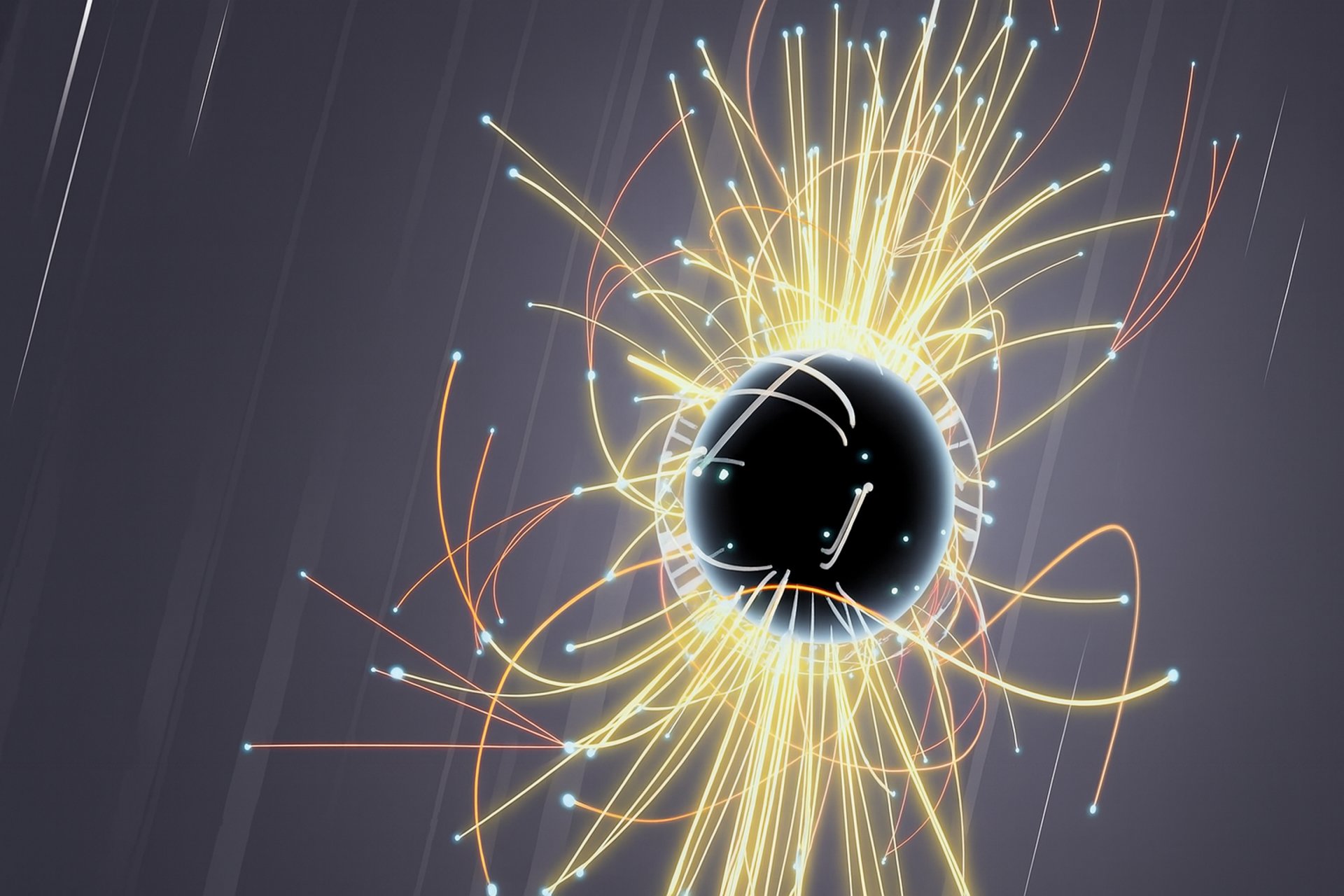
Quantum physics advances, humanity falls back: new particles in a world that keeps killing in Palestine
A particle that only has mass when it moves in one direction rewrites physics… while we still fail to learn how to move forward as a society.
Edú Saldaña
9/29/20253 min read
🚀 When science runs faster than morality
A group of physicists has just observed for the first time a particle that only has mass when it moves in a specific direction. It sounds like a tongue-twister, but it’s not a joke: it’s a discovery published in Physical Review X that shakes the laws we know.
Meanwhile, here on Earth, we keep witnessing genocides, like the one the Palestinian people are suffering today.
In short: we already have particles that defy the universe, yet we remain unable to defy our collective stupidity.
🧩 What the hell did they discover exactly?
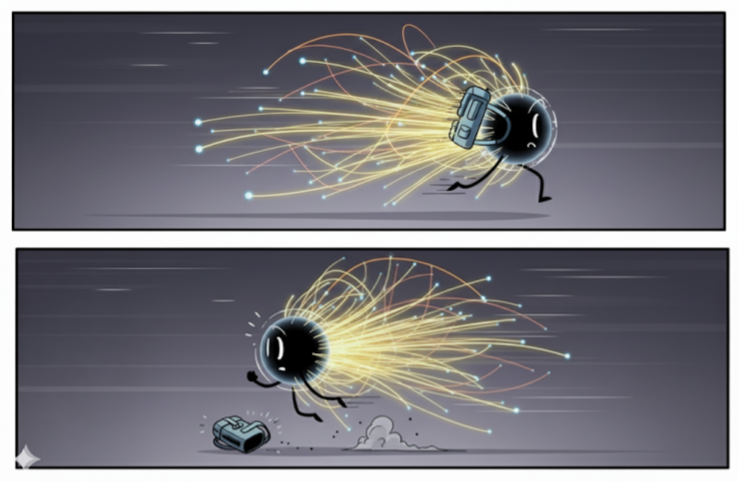
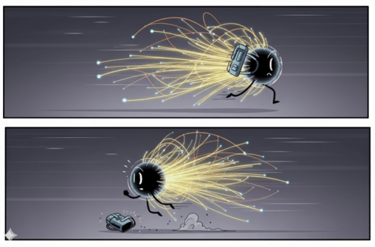
Scientists observed that certain particles, when moving in one direction, behave as if they have mass, but if they change direction… boom! that mass disappears.
It’s like your phone only weighing something when you carry it in your right pocket. In the left one, it’s magically weightless. (And yes, it still falls and breaks).
🧪 The explanation for normal humans like me (without a PhD in physics)
In classical physics, mass is constant: a rock weighs the same whether you’re in Miami or on Mount Everest (though on Everest you feel it more because you’re also short on oxygen).
But in this experiment, they managed to manipulate quantum conditions so that the particle gains mass directionally.
It’s like that aunt who only greets you when you go to her house. If you visit her, she has “social mass”; if not, she simply doesn’t exist.


🎭 Between scientific wonder and moral absurdity
This breakthrough is historic: it opens doors to new theories of matter, the design of quantum materials, and perhaps to computers that make your current laptop look like a Casio calculator.
But… how far is science from social reality?
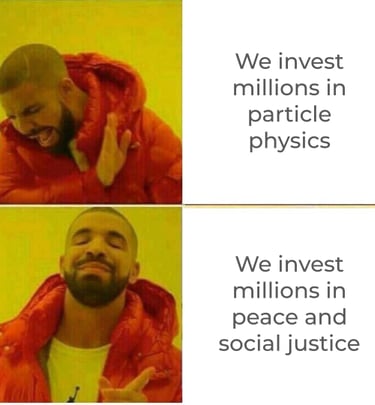
In Gaza, while children die under bombings and famine prolonged by the Israeli government, millions are invested in laboratories to study whimsical particles. Ironies of the 21st century.
We keep splitting atoms while we can’t even split a restaurant bill fairly.
⚙️ Possible applications (and not so possible ones)
So, what is this discovery good for? It’s still in its infancy, but some paths are emerging:
Futuristic materials: creating solids that change properties depending on how electrons move.
Quantum electronics: faster, more efficient chips and, hopefully, ones that don’t fry when you play GTA 6.
New states of matter: explorations that could lead us to a new periodic table (with even stranger names than those of reggaeton artists).


🕰️ Science vs. society: the eternal paradox
This finding reminds us of something uncomfortable: science advances faster than our ethical capacity. We are creating knowledge that could revolutionize the future, yet we remain trapped in archaic violence.
It’s like having the recipe for the perfect Manhattan and still insisting on buying Smirnoff Ice.
Science teaches us that the universe is expanding… but human common sense seems to be shrinking.


🧬 A quote from Brian Malow that sums it all up
“By all means, tell us the fact — but don’t stop there.” — Brian Malow
That’s exactly what we need today: not just to celebrate that physics can discover extremely rare particles, but to explain what they mean for real life—for ethics, for politics, for the people suffering right now. Data by itself doesn’t build a better world; the meaning we give it —and the decisions we make from it— do.
I invite you to watch the TED talk “What it really means.” Malow, the science comedian, achieves what few can: turning cold facts into warm reflections that truly invite us to think.

🌍 Final reflection: progress or mirage?
The discovery of the particle with directional mass is a fascinating milestone. It shows us that the universe still holds secrets worthy of science fiction. But it is also a mirror: knowledge without ethics is like a rocket pointing in the wrong direction.
👉 Question for you, reader: What’s the point of discovering new particles if we can’t even guarantee the lives of those who already exist?
🗣️ Share your opinion in the comments and spread this article. The conversation shouldn’t stay in a paper, but in the debate where we decide what future we want.
Kunan Project
We use humor to break down complex issues, connect communities, and build a more inclusive future
© 2025. All rights reserved.
info@kunanproject.com