



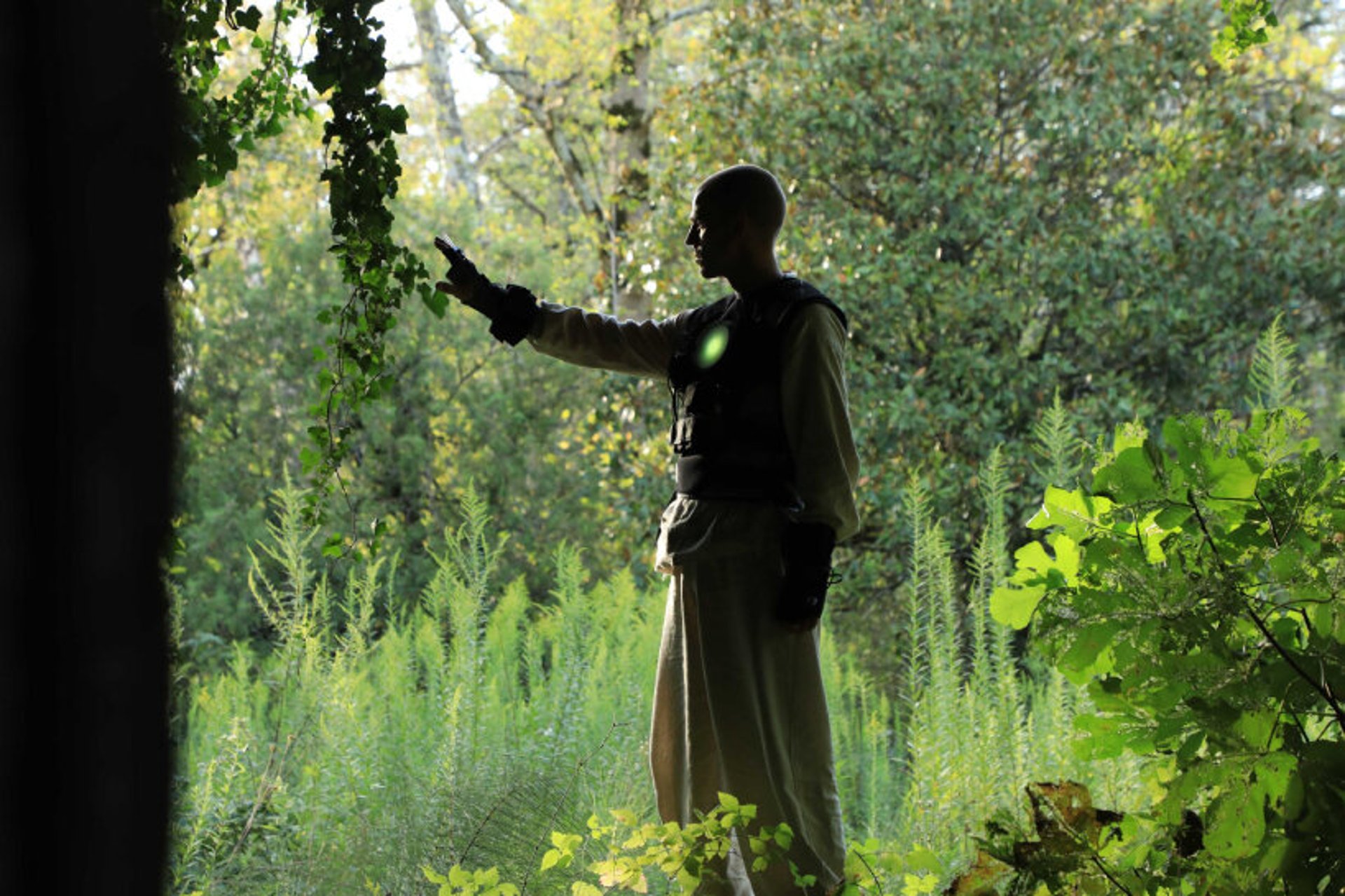
We invented a vest to listen to plants because we’re tired of listening to people
GAIA, the technology that tells you when a plant is sad — but not when your friend needs to talk.
Edú Saldaña
10/5/20258 min read
🤖 Welcome to the club of futuristic absurdity
A few years ago we dreamed of flying cars. Today… we have a vest that lets you feel the health of a plant. Yes, you read that right: you can put on the GAIA Communication System, close your eyes, and “sense” whether your cactus is stressed or if the soil in your pot has gastritis.
And although it sounds like a lost episode of Black Mirror, it’s 100% real.


🦺 What the hell is GAIA?
The GAIA Communication System is basically what would happen if a smartwatch, a Zen gardener, and a NASA engineer had a baby.
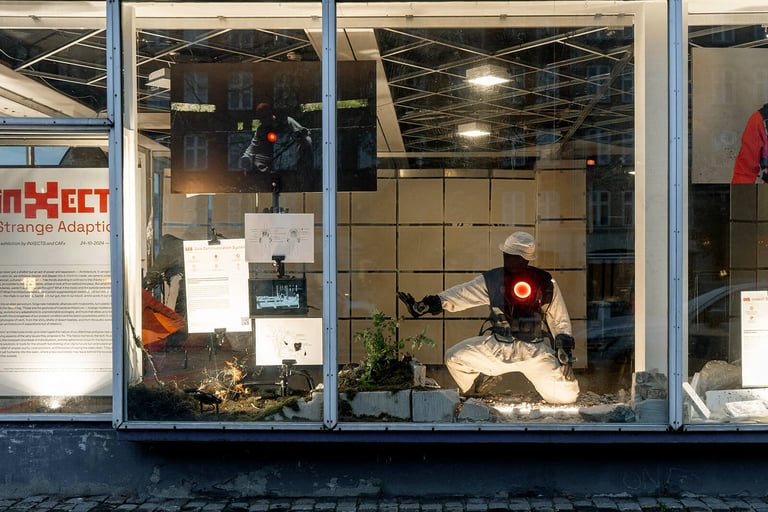
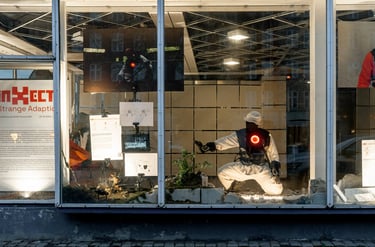
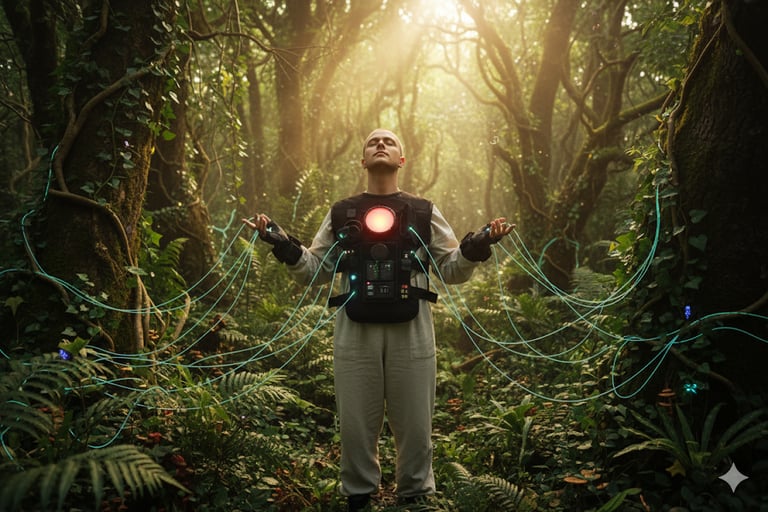
It’s a combo of vest and gloves with haptic sensors that translate into vibrations what nature is feeling: humidity, temperature, plant stress, insect movement, and more. Instead of looking at cold data on a screen, your body becomes the interface. You literally feel what the forest feels. In other words: GAIA doesn’t show charts—it translates them into sensations. It’s the emotional language of the Earth… but with Bluetooth.
And before you say, “This sounds like Black Mirror on hippie mode,” no: it’s not an app to talk to your houseplant (though who knows). It’s a technological system designed to help humans and ecosystems resynchronize after centuries of disconnection.
It’s like a WhatsApp for nature, but without the endless five-minute voice notes—only messages that truly matter. “Dry soil. Help.” — no emojis, but definitely urgent.
🧙♀️ How does the magic work?
The idea of “feeling nature” sounds a bit mystical, but it’s more science than shamanism. GAIA combines sensors, haptic electronics, and textile design to become —literally— a sensory extension of the ecosystem.
Sensors in nature → They’re placed in the soil, on leaves, or even in insect hives. They measure humidity, temperature, electrical activity, and vibrations. Yes, plants do “vibrate,” just not to the rhythm of reggaeton.
Haptic vest + gloves → They translate all that information into physical impulses your body can feel. If a tree gets stressed from lack of water, the vest vibrates. If the soil overheats, the glove warms up.
You, the human in the middle of plant Wi-Fi → You go from being a simple spectator with a green-filter Instagram story to a sensory avatar of your garden. Basically, you’re the live translator between moss and modernity.
It’s like putting on a VR gaming vest, but instead of taking digital bullets in Call of Duty, you feel your basil plant panicking because you forgot to water it for the third day in a row. And yes, it also works with your Mary Jane pot: when it vibrates, it’s not always happiness.
The craziest part is that there’s no screen. Everything is felt. GAIA erases the boundary between technology and biology, turning information into bodily experience. It’s the closest we’ve come to the hippie dream of “being in tune with the Earth,” only now with USB-C and firmware updates.
🌱 When tech nerds end up ruling even the plants
As Nathan Macintosh brilliantly says in his special Down With Tech:
“Tech nerds run the entire world. Everything we do and use goes through a tech nerd.”
And yes, it’s true. Once upon a time, world leaders, priests, or footballers set the pace of the planet… now it’s engineers with dark circles and Linux T-shirts. Proof? Today you can wear a vest that vibrates when your lettuce is stressed.
It’s ironic: while we keep fighting online over politics or religion, a group of nerds decided the priority was to give a voice to a cactus. And here we are, thrilled that GAIA lets you feel the heartbeat of a worm better than that of your partner.
And let’s be clear: if technology already controls your job, your shopping, your leisure, and even your sex life — why not your conversations with your balcony plants too? The funniest part is… they’ll probably leave you on “seen.”
If you want to laugh (and cringe) at more uncomfortable truths about how tech has taken over — even the way we talk, eat, and relate — I recommend Nathan Macintosh’s full Down With Tech special on YouTube. It’s a sharp but hilarious look at the absurdity of our digital dependence… and a reminder that we’re all trapped in it:

🥦 Nature with Wi-Fi: GAIA applications that aren’t a joke
Ok, beyond the laughs and memes, GAIA has applications that sound amazing. This invention isn’t just a lab whim or an eco-influencer toy; it’s a tool that could change how we relate to the planet — if we use it wisely, of course.
🌾 Precision agriculture:
Imagine knowing exactly when to water your crops without wasting a single drop. GAIA can detect microchanges in soil humidity and translate them into sensory alerts. It’s like the Earth itself sending you a message saying, “Hey, enough water, I’m good.”
🌲 Environmental restoration:
Forests breathe, pulse, and also get stressed. This system can detect signs of deterioration — such as variations in temperature or vibrations — before an ecosystem collapses. In other words, we could prevent natural disasters before they hit the news.
📚 Ecological education:
GAIA turns environmental learning into a sensory experience. Children (and adults traumatized by PowerPoints) can literally feel how natural life flows. It’s a step beyond the usual bean germination experiment — now you can actually feel the bean.
🐝 Insect conservation:
The sensors can record pollinator activity, detect changes in their behavior, and help us protect them. Because without bees, there’s no fruit, and without fruit, there’s no natural juice for your detox.
💆♀️ Bonus: ecological therapy:
Some studies already explore how feeling the “heartbeats” of the forest can reduce human stress. So yes, maybe the next meditation trend won’t come from an app, but from a tree.
GAIA isn’t just green tech; it’s a bridge between biology and empathy. Nature isn’t shouting for likes — it’s asking us to listen again.
😳 Wasn’t it enough to just look at the plant?
Here comes the uncomfortable part.
Because let’s be honest: do we really need a $5,000 vest to realize that a plant needs water or that the soil is dry? Or did we invent it because, deep down, we’ve lost the ability to notice the obvious?
GAIA is brilliant, yes — but it’s also a mirror. It shows us how far we’ve gone in needing gadgets to replace what used to be instinct. Our grandparents knew when to water crops without Wi-Fi, an app, or a vibrating vest. Today, we need haptic feedback to remember that the earth isn’t decoration — it’s what keeps us alive.
The deeper question is: are we truly more connected to nature, or have we outsourced that connection to a device? It’s like buying a smartwatch to remind you to breathe… when you already have lungs.
And here’s the harshest part: if we struggle so much to listen to other people — to be tolerant, to talk, to coexist — how could we not end up inventing clothes to listen to trees? The GAIA vest isn’t just a futuristic gadget; it’s also a reminder of our social and environmental deafness.
In the end, GAIA doesn’t vibrate for the plant. It vibrates for us.


🧘♀️ Just a business with green branding?
The GAIA Communication System project presents itself as a way to reconnect with nature. And yes, the idea of feeling how a tree “breathes” or how the soil “suffers” through a vibrohaptic vest sounds almost mystical — as if Pachamama were sending you a direct message on WhatsApp.
But behind this poetic technology lies a more down-to-earth dilemma:
Are we creating a tool to save the planet… or just another luxury gadget for eco-techies with green wallets (literally and figuratively)?
GAIA promises empathy with the environment, but it also costs thousands of dollars and comes with state-of-the-art sensors. It’s the kind of product that looks designed for the Museum of the Future in Dubai, not for the farmers who actually depend on the weather.
It’s ironic, isn’t it? We created technology to feel nature, but nature itself can’t afford it. And while some influencers post “listening to my favorite plant 🌿✨”, millions of people still lack access to clean water.
That’s why GAIA’s real challenge isn’t in its hardware, but in its ethical software — how we move from eco-marketing to real impact. Because if every “green” innovation comes with a premium label, what we’re cultivating isn’t awareness — it’s a new kind of social luxury.
Nature doesn’t need you to listen to it through a vest; it needs you to listen with empathy.
💖 Technology with feelings, humans without them
We keep inventing increasingly sophisticated ways to “connect” with what surrounds us: haptic suits to feel trees, sensors that measure the sadness of the soil, apps that tell you if your plant is depressed. Yet we still can’t connect with the basics: peace, empathy, social justice.
And that, if you think about it, is as absurd as it is brilliant. We design technology to listen to nature while ignoring the people screaming for help in wars we ourselves fuel. We build antennas to capture the language of insects, but we can’t hold a decent conversation on X (Twitter) without setting the planet on fire.
It’s a little sad — and a little funny. Like inventing a universal translator to talk to your dog… and still not understanding your partner.
Maybe GAIA isn’t just a technological invention, but an uncomfortable mirror — one that reminds us that sometimes it’s easier to empathize with a tree than with another human being. Science advances out of curiosity, but empathy fades for lack of practice.
💫 Final reflection: technology brings us closer… but to whom?
GAIA is a marvel — a mix of science fiction, sensory poetry, and eco-chic gadgetry that could make Silicon Valley cry with emotion. But it’s also an uncomfortable mirror. Because, if you think about it, aren’t we designing technology to reconnect with nature… just because we no longer know how to reconnect with ourselves?
We’ve become so skilled at measuring the pulse of trees that we’ve forgotten to check the pulse of our own humanity. We want to feel the sadness of the forest, but we ignore the pain of those living on the streets. We create sensors to detect soil stress, yet remain indifferent to the stress of those who work it.
Maybe the real question isn’t how advanced technology has become, but how emotionally behind we are. Feeling has become so hard that we had to invent a vest to remind us how.
🤔 Question for you:
If we had the same urgency to feel the planet’s pain as we do to understand our own species… would we keep building sensors, or would we start building community?
Share your thoughts below and spread this article. Maybe what we really need isn’t a haptic vest to feel plants, but an emotional revolution that brings back our capacity to feel each other as humans. Because the sustainable future isn’t coded — it’s cultivated in empathy. The future is NOW.
Kunan Project
We use humor to break down complex issues, connect communities, and build a more inclusive future
© 2025. All rights reserved.
info@kunanproject.com