



Sustainability unfiltered: do we really want to save the planet or just look cool on Instagram?
What a study on the Peruvian coast taught us: changing aquaculture lanterns on time reduces marine gunk, keeps more animals alive until harvest, and improves profitability.
Edú Saldaña
11/2/20253 min read
🪸 What’s the problem? In simple terms
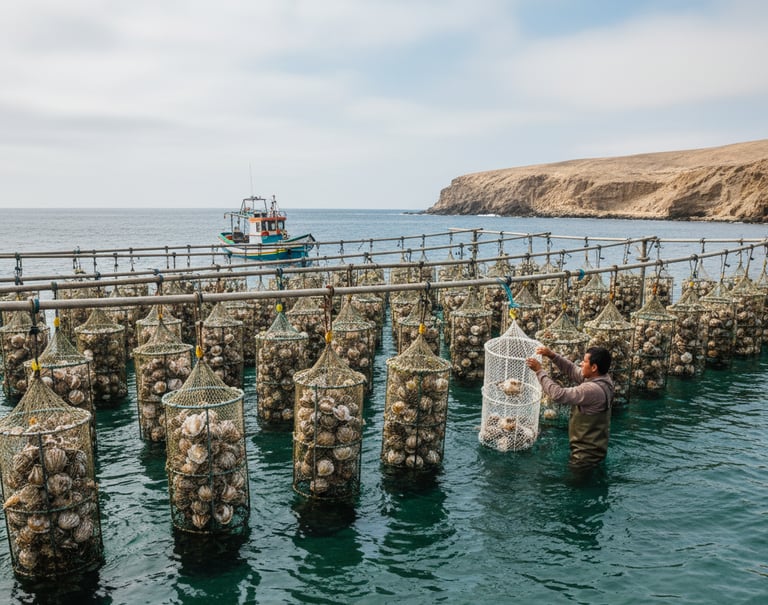
In the sea, everything sticks — algae, small animals, and marine “slime” cling to the nets or cages used for aquaculture (in this case, lanterns where scallops grow). This is called biofouling. When this layer grows too much, it blocks water flow, reduces oxygen, increases the weight of the nets, and makes work harder.
Result: animals grow less and die more often. (A mess for both the environment and the producer’s wallet.)
In other words, if biofouling gets out of control, fewer animals reach harvest alive, and if you manage it properly, more do. Simple. Read the full paper here.
🔬 What did the study test?
Dr. Saldaña’s team compared two ways of managing aquaculture lanterns in a Peruvian bay:
T1 (with rotation): change or rotate the lanterns halfway through the final growth stage.
T2 (no rotation): leave them as they are until harvest.
Key findings:
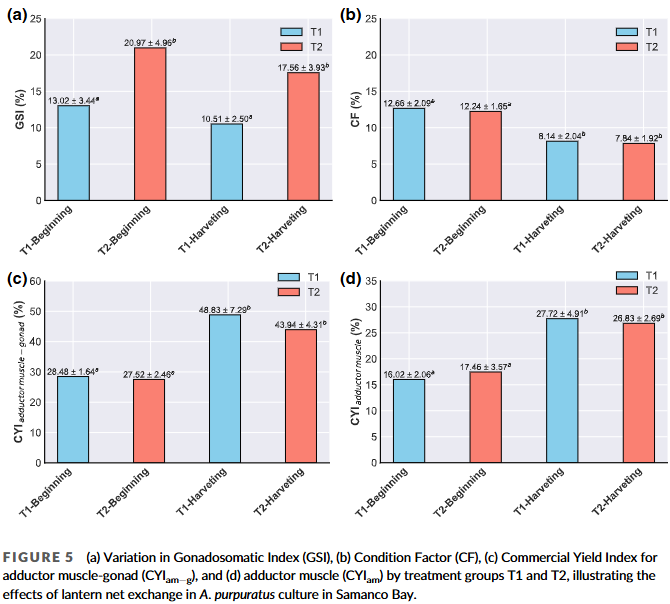
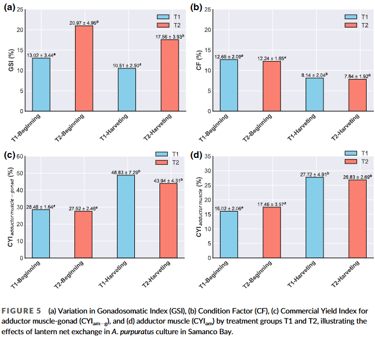
Less gunk buildup: when rotating the lanterns, the “fouling layer” was reduced by -64%.
More animals alive: survival increased by 10%.
Better commercial quality: more muscle (+62%) and higher yield (+52%). In other words, larger and better-conditioned scallops.
More money: they estimated +US$ 6,500 per hectare with disciplined management.
The study used 10-tier lanterns, 25 scallops per tier, in Samanco (Áncash), comparing T1 vs. T2 with replicates.
💧 Why does it work?
When you change or rotate the lanterns before the gunk becomes a thick “coat,” water starts circulating again, oxygen increases, and animals breathe and eat better. The paper explains that this way you interrupt the biofouling colonization process (you cut it off early) and prevent extra costs from added weight, re-floating, or heavy cleaning.
Ultra-simple version: if your kitchen strainer gets full of gunk, it stops draining. Clean it before it turns into a pumice stone — and it does its job. Done.
💰 And how does that affect my wallet?
The paper shows that with scheduled lantern rotations you reduce “dead weight,” save fuel and time during harvest, minimize staff effort and cutting work, and limit long trips for deep cleaning (you only bring up the heavily fouled nets). All of this improves operational efficiency and reduces costs.
Keep this image in mind: lighter lanterns = easier handling = fewer labor hours + less fuel = more profit margin.
😂 Humor that builds bridges
Sometimes “sustainability” feels distant. That’s why I like how Esteban Gast (comedian and climate educator) uses humor to talk about serious things without bringing you down. In his podcast, he drops a thought that fits perfectly here:
«Isn’t it wild that we have the tools to be better and we’re not... ? Shouldn’t we all be wondering right now why we’re not doing that?»
Applied to this study: if a simple timely rotation can lead to better environmental and economic results, what are we waiting for to make it a standard practice (in norms, funding, purchasing, certifications)? It’s not an individual’s fault — the system should make what works easier. (Esteban always insists we move from blaming individuals to fixing systems.)
If you like humor that informs and disarms excuses, listen to Esteban’s full podcast episode. You’ll laugh, think, and finish wanting to take action:

🌱 What’s changing in the sustainability conversation?
This paper isn’t about “saving the planet” with pretty words. It’s about a concrete action that reduces negative impact and improves results. That’s what we should reward in public policy, funding, and sustainable procurement: things that work and can be replicated.
If your “green” strategy can’t survive a two-column Excel sheet (cost vs. real benefit), it’s probably propaganda, not progress.
Next time you see a “sustainable” label, ask yourself: what’s different in practice? This study gives a clear answer: timely rotation helps improve the environment, save more animals until harvest, and increase income. And that, in any language, is good news.
💬 Question for you:
What do you think has a greater impact on making a sustainable economy real — an inspiring speech or a simple, verifiable fact?
I’m reading your thoughts in the comments. If this helped you see sustainability unfiltered, share the article. The more people understand the simple stuff, the faster we’ll change the big stuff.
Kunan Project
We use humor to break down complex issues, connect communities, and build a more inclusive future
© 2025. All rights reserved.
info@kunanproject.com