



AI is already outdated: now brains are sold by processing unit
CL1: The computer made with human neurons that can think, learn… and give you existential nightmares.
Edú Saldaña
10/26/20255 min read
Welcome to Brain 2.0
Imagine a computer that doesn’t just think, but feels, learns, adapts… and, who knows, maybe one day will correct your grammar in a passive-aggressive tone.
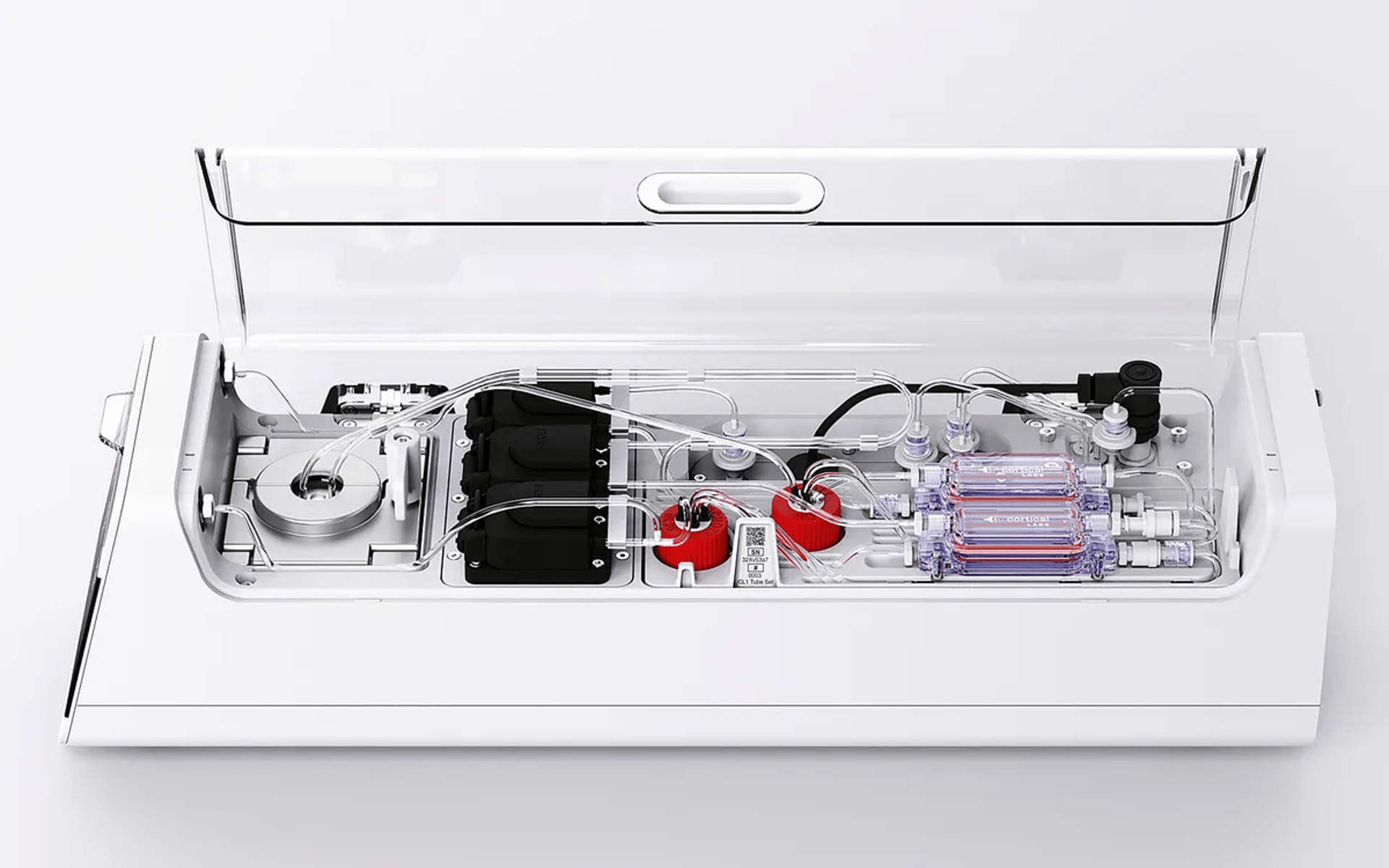
That’s CL1, the new biological system created by Cortical Labs, an Australian company that just unveiled something that blurs the line between biology and computing. We’re no longer talking about artificial intelligence, but about living intelligence.
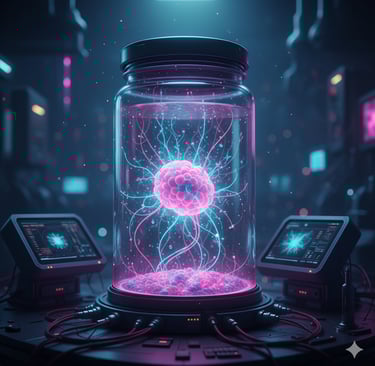
CL1 isn’t “inspired” by the human brain. It’s made from human brain. Well, from neurons grown in a lab, connected to silicon chips, capable of processing information, learning from experience, and responding to stimuli in real time.
Or, as any millennial without therapy would say: “It’s a functional brain, but without emotional trauma or student debt.”
🤯 What the hell did they just invent?
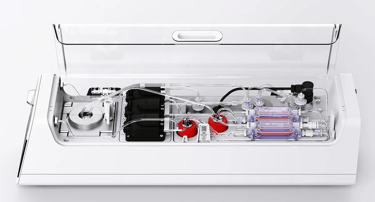
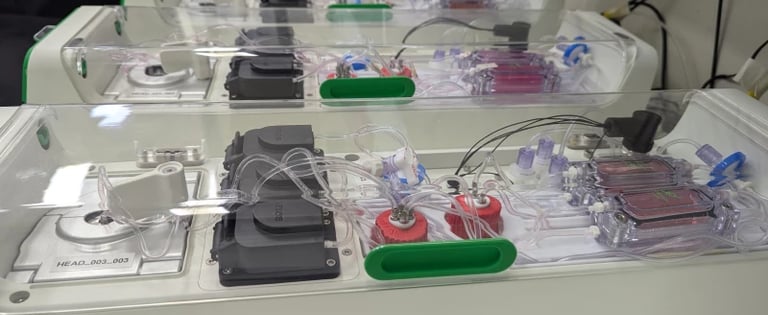
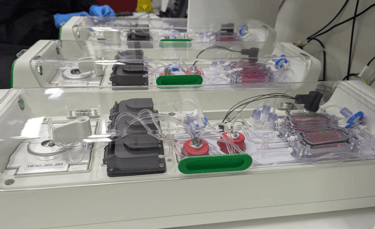
The CL1 is the world’s first commercial biological computer, a mix of silicon and living human neural tissue.
Yes, you read that right: living.
The neurons grow on a matrix of microelectrodes. These sensors read and stimulate the tissue’s electrical activity, allowing the system to learn patterns just like a brain would.
And what does that achieve? A computer that doesn’t follow instructions — it learns from experience.
Think of it as a CPU that acts like a cat: it ignores what you tell it, but still figures out how to manipulate you.
Cortical Labs says the CL1 can perform complex tasks like pattern recognition and adaptive simulation using far less energy than a conventional AI. In other words, while ChatGPT consumes as much energy as all of Brazil watching the 2002 World Cup final, the CL1 runs on less power than an LED bulb.
And yes, the inevitable question: Can it run GTA VI?
🧠 How this madness works
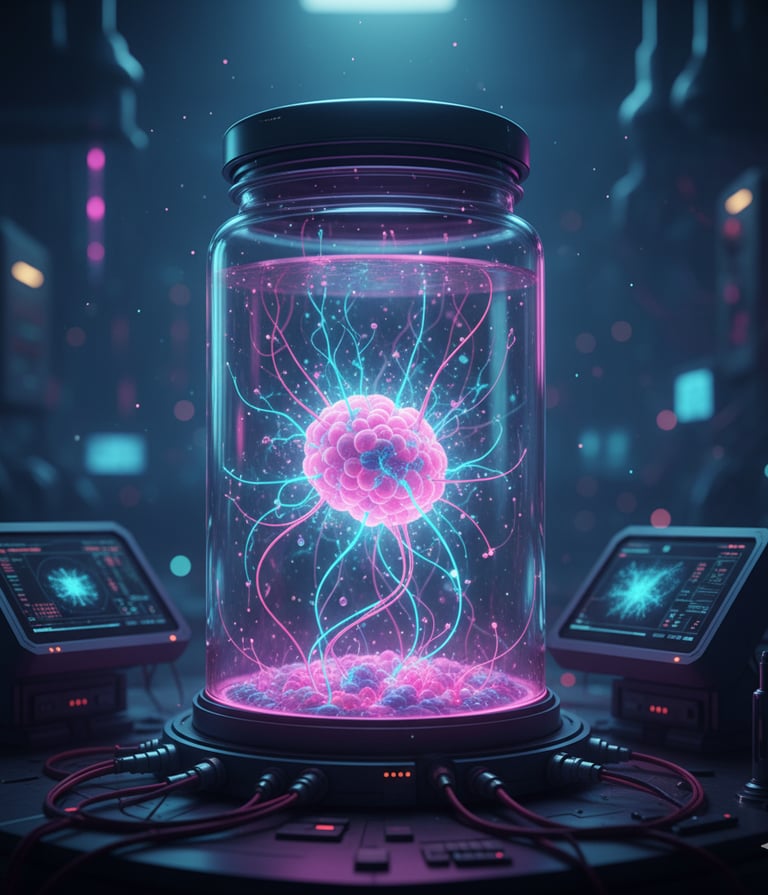
In simple terms: the CL1 uses mini-brains grown in a lab that interact with silicon hardware.
Each cluster of neurons functions as a small network capable of processing electrical signals. The chip reads and stimulates these signals, translating them into computational data. This allows the system to learn to recognize stimuli, improve its responses, and even adapt to new environments.
To give you an idea, the CL1 processes data faster than the IRS takes to charge you a fine. But when it comes to issuing a refund, that’s when the IRS turns into the typical government agency — painfully slow and bureaucratic.
🧫 From DishBrain to CL1: when science gets bored of the artificial
Before the CL1, Cortical Labs created DishBrain, a similar system that proved human neurons could learn to play Pong — yes, that 70s game with the little bouncing ball.
But the CL1 plays in another league. It has more neurons, better electrical integration, and software that allows real-time learning simulation. In other words: we’ve gone from Pong to complex thought.
And, as a good evolutionary leap, it raises the question no one wants to ask: What happens when a piece of brain learns something we didn’t teach it?
Because if a living neural network can learn, where do we draw the line between program and consciousness? And even more importantly, what do we say when it asks if it has labor rights?
If GAIA (the vest that lets you feel plants) was the first step toward connecting with nature, CL1 is the next one: connecting with a miniature version of ourselves — just with less anxiety and more processing power.
🧠 The dark side of silicon with neurons
The scientific community is fascinated… and a little scared.
Not because of what CL1 can do, but because of what it represents:
a hybrid life form, half biological, half machine.
Could it become self-aware? Maybe.
Could it learn to defend itself if we try to shut it down? Also possible.
Could it run the DMV system without crashing? Now that’s true science fiction.
But beyond the jokes, there’s a serious question: Where does engineering end and ethics begin?
We’re no longer “training” machines. We’re raising brains. And in a world where some people still believe the Earth is flat, that sounds dangerously ahead of its time.
🎭 Jena Friedman: humor is the best microscope
«The theme of TED2025 is ‘Reinvented Humanity’, which sounds like a euphemism ChatGPT came up with to mean that we’re all being replaced by machines.»
— Jena Friedman, The Jokes AI Won’t Tell
In her special, Jena drops this line with a razor-sharp smile. And she’s right: we live in an era where every innovation is sold as “reinvention,” though what we’re really doing is training technology so it no longer needs us.
The CL1 is the scientific version of that joke. While conferences promise “a new humanity,” a cluster of human neurons connected to silicon are already replacing what once made us unique: the ability to learn, adapt, and remember without an algorithm telling us to.
It’s funny… and also tragic. Reinventing humanity sounds inspiring—until you remember that most people can’t even reinvent their passwords.
But the real irony is that CL1—a system that doesn’t sleep, feel anxiety, or show up late because of traffic—could end up representing the human species better than we do ourselves. Because if an artificial brain learns empathy before Congress learns ethics, then yes: “reinvented humanity” will be an upgrade, not a metaphor.
Maybe the only thing left to close the cycle is for CL1 to start giving TED talks. Suggested title: “How I Survived Humans: A Story of Neuronal Resilience.”
If you enjoy jokes that hurt the more true they sound, check out Jena Friedman’s TED Talk. The Jokes AI Won’t Tell is a masterclass in laughing at the future… before the future laughs at you.

🧠 What if artificial intelligence isn’t artificial anymore?
The CL1 doesn’t replace AI. It reinvents it. It’s no longer about machines that imitate brains — it’s about brains that amplify machines.
We’re creating a symbiosis where the biological and the digital become indistinguishable. And that’s poetic… and terrifying. Because if we can get a cluster of neurons to think, what’s next? Brains connected through blockchain? Dreams sponsored by NVIDIA? ChatGPT making Jewish jokes?
In the end, CL1 doesn’t just change how we process data — it changes how we understand what it means to be alive.
🤔 Question for you:
Are we building the future… or just a more efficient version of ourselves for when we stop working?
Share your thoughts, post this article on your socials, and send it to that friend who says, “I don’t think AI will ever take my job.” (Maybe CL1 will.)
Kunan Project
We use humor to break down complex issues, connect communities, and build a more inclusive future
© 2025. All rights reserved.
info@kunanproject.com